
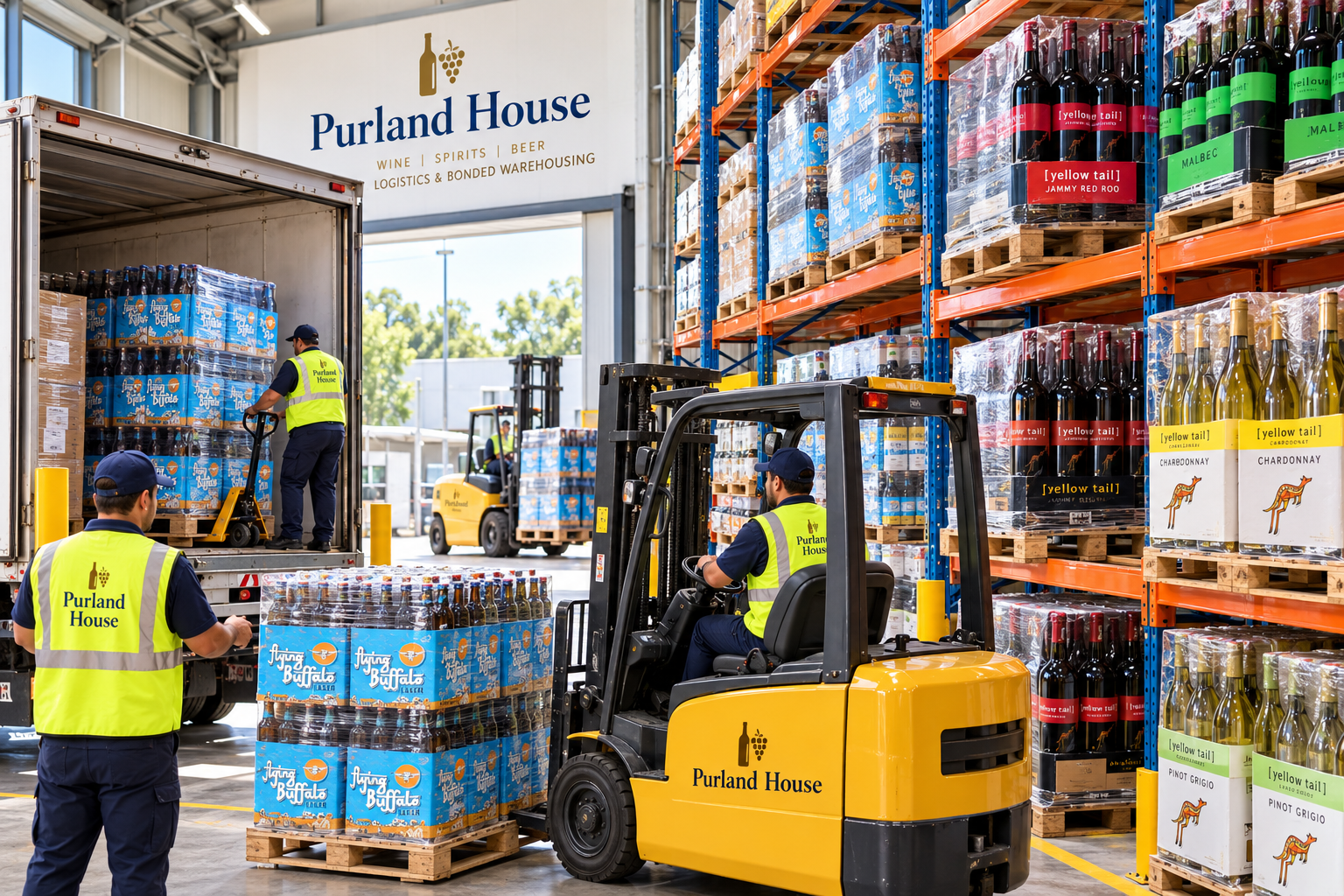
What Alcohol Importers and Exporters Need from Bonded Storage?
For alcohol importers, exporters and distributors, a warehouse is only one link in the supply chain. In 2026, the UK–India trade environment and wider global disruption continue to make freight, energy, routes and supply-chain costs difficult to predict.
India remains a growth market, with demand influenced by premiumisation, rising beer consumption and changing consumer preferences. The UK is more mature, with cautious consumers, changing drinking habits and rising operating costs. With opportunities developing abroad while margins remain under pressure, efficient stock handling matters more than ever.
Why the Warehouse Matters
An alcohol bonded warehouse does more than store goods. Under the appropriate arrangements, stock can remain under duty suspension while customs procedures, inventory management and onward movement are organised.
This can be particularly important when importing alcohol into the UK, where excise duty applies to beer, wine, spirits and other alcoholic products.
A bonded warehouse in London can therefore act as an operational control point between arrival, customs clearance and final distribution, rather than simply being a place to keep stock.
Inventory Control Matters More
The UK–India Free Trade Agreement creates new opportunities, including the potential for reduced tariffs and more predictable customs arrangements for qualifying goods. However, the benefits are not automatic.
Each shipment still requires appropriate attention to commodity classification, origin requirements, documentation and the relevant customs procedure.
India adds another layer of complexity. Alcohol is tightly regulated, with excise and distribution requirements varying between states. Businesses exporting alcohol from the UK into multiple Indian markets therefore need careful inventory planning and a clear route to market for each destination.
The commercial opportunity may be growing, but the margin for operational error is not.
Security and Handling Are Part of the Equation
Storage conditions matter when valuable alcohol stock is sitting in a warehouse awaiting release or onward transport.
Importers should consider whether bonded warehousing services provide appropriate security controls, monitored access, alarm systems, stock identification and documented handling procedures.
For businesses looking for storage with alarm systems in London, these controls are not simply about protecting physical stock. They form part of a wider process for maintaining inventory visibility and reducing avoidable operational risk.
What to Check Before Moving a Shipment
Before moving alcohol into a bond warehouse, businesses should establish:
- Whether the product can be held under the appropriate bonded arrangements.
- Whether the required customs, excise and origin documentation is available.
- Whether the transaction requires any alcohol export license, authorisation or approval in the UK or destination market.
- What storage capacity and handling procedures are available.
- What security controls, alarm systems and monitored access are in place.
- How stock will move from the bond to the importer, distributor or final market.
- How inventory movements and release instructions will be recorded and controlled.
More Than Storage
Effective bonded warehousing provides visibility and control from arrival through to release.
For brands working with Purland House, the operational objective is straightforward: secure stock, organised documentation, controlled inventory movements and a clear next step.
When trade rules, consumer behaviour and geopolitical conditions are changing, that control can give importers and exporters greater confidence without unnecessarily reducing flexibility.
The Strategic Role of Bonded Storage
The value of bonded storage is not simply the physical space available on a warehouse floor.
It is the ability to integrate storage with customs processes, inventory control, security and distribution planning. For businesses exporting alcohol or importing products into the UK, this can make the warehouse an important part of the wider supply-chain strategy.
As UK–India trade develops and international logistics remain exposed to disruption, choosing the right bonded warehouses in the UK can help businesses manage stock more deliberately and respond to changing market conditions.
Conclusion
A warehouse holds your stock, but the right bonded arrangement helps you manage everything around it.
As UK–India trade expands and global logistics remain unpredictable, alcohol importers, exporters and distributors should treat bonded storage as part of their wider supply-chain strategy, not simply as a place to keep stock.
About the author: Purland House Ltd — specialists in HMRC bonded warehousing, customs compliance, and alcohol logistics in London.
Published on: 2026-10-06